
A Fresh Look at U.S. Economic Growth & Revenue Before 1913

Fresh Look: U.S. Economic Growth & Revenue Before 1913
Introduction
Generally, the late 19th and early 20th centuries were transformative for the U.S. Economic Growth, marked by rapid industrialization, expanding global trade, and significant economic shifts. Therefore, during this period, the federal government primarily relied on tariffs and excise taxes as major revenue sources. Consequently, the absence of income tax meant that the government had to generate funds through indirect taxation, which influenced trade policies and economic growth. Hence, this article explores the major revenue sources before the introduction of income tax in 1913 and their impact on the economic landscape.
U.S. Economic Growth and Industrial Expansion
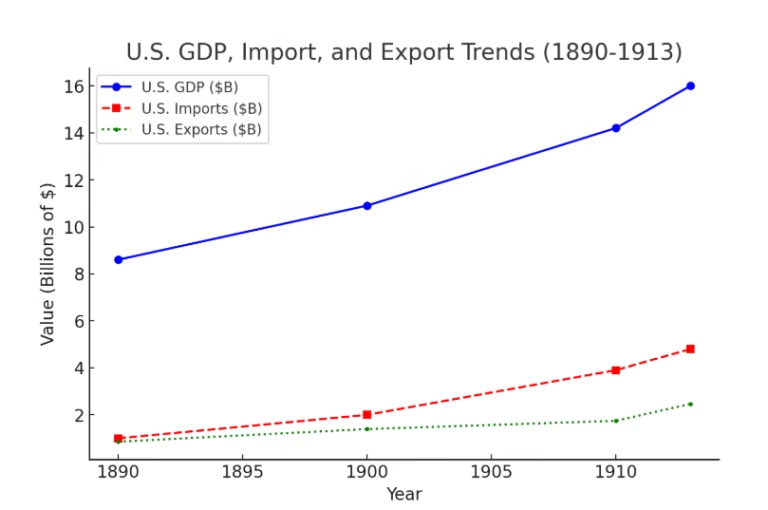
Overall, between 1890 and 1913, the United States experienced substantial economic growth. Hence, the Second Industrial Revolution brought advancements in manufacturing, transportation, and communication, transforming the nation into a global economic power. Moreover, key industries, including steel, oil, and railroads, flourished, and urban centers expanded rapidly as millions of immigrants arrived to work in factories and construction projects.
Furthermore, during this era, domestic production soared, and the country strengthened its position in international trade. However, the federal government’s ability to finance itself remained tied to a taxation system that heavily relied on tariffs and excise taxes rather than direct income taxation.
Primary Revenue Sources (1890-1913)
Before the ratification of the 16th Amendment in 1913, the federal government depended on indirect taxation to generate revenue. The primary sources included:
1. Tariffs on Imported Goods
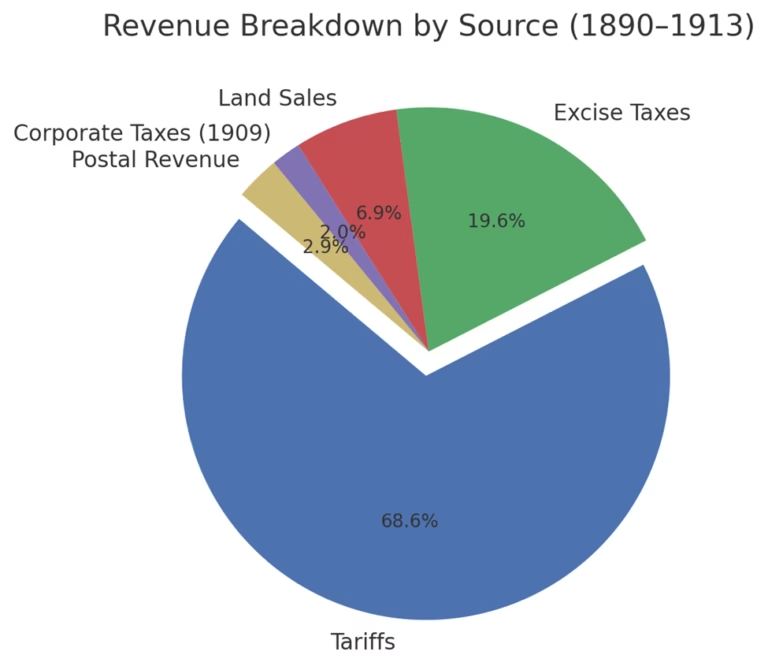
Tariffs were the largest source of federal government revenue during this period, accounting for approximately 68.6% of total funds. These duties were imposed on imported goods, serving two primary purposes: revenue generation and protection for domestic industries.
- Impact on Consumers: High tariffs raised the prices of imported goods, making foreign products more expensive. While this encouraged consumers to buy domestically produced items, it also led to higher costs for essential goods, disproportionately affecting lower-income citizens.
- Protectionism vs. Free Trade: The U.S. government frequently adjusted tariffs to balance the competing interests of industrialists and consumers. Protectionist policies favored manufacturers by limiting foreign competition, while free trade advocates argued that tariffs restricted economic efficiency and international commerce.
2. Excise Taxes
Excise taxes, also known as “sin taxes,” accounted for about 19.6% of government revenue. These taxes were imposed on specific goods such as alcohol, tobacco, and luxury items.
- Targeted Taxation: The rationale behind excise taxes was to generate revenue from goods considered non-essential or harmful, such as liquor and cigarettes. These taxes were relatively easy to collect and enforce, making them an attractive revenue source.
- Economic and Social Consequences: While excise taxes provided a steady stream of government income, they also led to underground markets and illicit production, particularly in the alcohol industry, foreshadowing future issues during Prohibition.
3. Other Revenue Streams
Although tariffs and excise taxes provided the majority of federal income, other minor sources of revenue included:
- Land Sales: The government generated funds by selling public lands, particularly in the western frontier.
- Postal Services: The U.S. Postal Service contributed a small but consistent revenue stream.
- Early Forms of Corporate Taxation: Before income tax, some corporate levies existed, though they were not yet a primary financial tool.
Related: U.S. Economic Growth & Revenue
The Debate Over Tariffs and Trade Policies
Tariffs played a crucial role in shaping U.S. economic policy, but they also fueled political and economic debates. The late 19th century saw conflicts between industrialists, agricultural interests, and consumer advocates regarding the fairness and efficiency of tariffs.
Arguments in Favor of High Tariffs
- Protection for Domestic Industries: High tariffs shielded American manufacturers from foreign competition, allowing industries to develop without being undercut by cheaper imported goods.
- Job Creation: By discouraging imports, tariffs were seen as a means of preserving domestic employment in manufacturing sectors.
- Government Revenue Stability: Since income tax was not yet in place, tariffs provided a reliable source of federal funds without directly taxing individual wages.
Criticism of High Tariffs
- Higher Consumer Prices: Import duties increased costs for everyday goods, placing a heavier financial burden on working-class Americans.
- Trade Retaliation: Other nations imposed retaliatory tariffs on U.S. exports, limiting international trade opportunities and affecting American farmers who relied on foreign markets.
- Economic Inefficiency: Critics argued that tariffs distorted free-market competition and stifled innovation by reducing pressure on domestic producers to improve efficiency.
One of the most controversial tariff laws of the era was the McKinley Tariff of 1890, which raised duties to nearly 50% on certain imports. This policy sparked widespread public backlash and influenced political elections, leading to tariff reductions in subsequent years. However, the debate over protectionism versus free trade continued into the early 20th century.
The Shift Toward Income Tax
Several factors contributed to the push for income tax:
- Economic Inequality: Tariffs disproportionately impacted lower-income consumers while benefiting wealthy industrialists, leading to demands for a fairer taxation system.
- Revenue Stability: Government expenses were increasing, and tariffs alone were not sufficient to cover growing public expenditures.
- Legal and Political Shifts: The Pollock v. Farmers’ Loan & Trust Co. case (1895) ruled an earlier attempt at income tax unconstitutional, prompting legislators to seek a constitutional amendment.
The 16th Amendment (1913)
The passage of the 16th Amendment marked a turning point in U.S. fiscal policy. Ratified in 1913, it granted Congress the power to levy a federal income tax without apportionment among the states. This transition allowed the government to generate revenue more directly and progressively, reducing dependence on tariffs.
Conclusion: U.S. Economic Growth & Revenue
In conclusion, the period between 1890 and 1913 was a defining era for the U.S. Economic Growth, characterized by increase in industrial production, urban expansion, and evolving trade policies. Furthermore, government revenue primarily depended on tariffs and excise taxes, which shaped economic and political debates. However, the increasing complexity of the economy and the need for a more sustainable revenue system led to the adoption of federal income tax. Moreover, this shift not only transformed government financing but also paved the way for modern fiscal policies that continue to shape the U.S. economy today.
References: U.S. Economic Growth & Revenue
Historical Statistics of the United States, Colonial Times to 1957: This comprehensive document from the U.S. Census Bureau offers extensive data on various economic indicators, including national income, imports, exports, and tariff rates during the specified period.
History of Tariffs in the United States: This Wikipedia article provides an overview of the evolution of U.S. tariff policies, highlighting how tariffs served as a primary revenue source before the introduction of the federal income tax in 1913.
How Did the United States Become a Net Exporter of Manufactured Goods?: This National Bureau of Economic Research (NBER) working paper explores the transition of the U.S. to a net exporter of manufactured goods around 1910, analyzing factors such as natural resource abundance and industrial expansion.
Trade Policy in American Economic History: This article reviews the broad changes in U.S. trade policy over the nation’s history, focusing on the role of import tariffs in revenue generation and protection of domestic industries.
Engineering Reference:
About George D. Allen Consulting:
George D. Allen Consulting is a pioneering force in driving engineering excellence and innovation within the automotive industry. Led by George D. Allen, a seasoned engineering specialist with an illustrious background in occupant safety and systems development, the company is committed to revolutionizing engineering practices for businesses on the cusp of automotive technology. With a proven track record, tailored solutions, and an unwavering commitment to staying ahead of industry trends, George D. Allen Consulting partners with organizations to create a safer, smarter, and more innovative future. For more information, visit www.GeorgeDAllen.com.
Contact:
Website: www.GeorgeDAllen.com
Email: inquiry@GeorgeDAllen.com
Phone: 248-509-4188
Unlock your engineering potential today. Connect with us for a consultation.