
A Fresh Look at U.S. GDP & Import Growth (1890-1913)

Fresh Look: U.S. GDP & Import Growth (1890-1913)
Introduction
Overall, the period between 1890 and 1913 was crucial for economic development, characterized by rapid U.S. GDP growth, increasing global trade, and industrial expansion. Moreover, during this transformative era, the nation established itself as a dominant economic force, with industries booming and urban populations swelling. In addition, alongside this growth, imports surged, reflecting a deepening integration with global markets. Hence, this article examines key economic trends before the introduction of the Federal Reserve and income tax, highlighting the policies and challenges that shaped the early 20th-century financial landscape.
Steady U.S. GDP Growth and Industrial Expansion
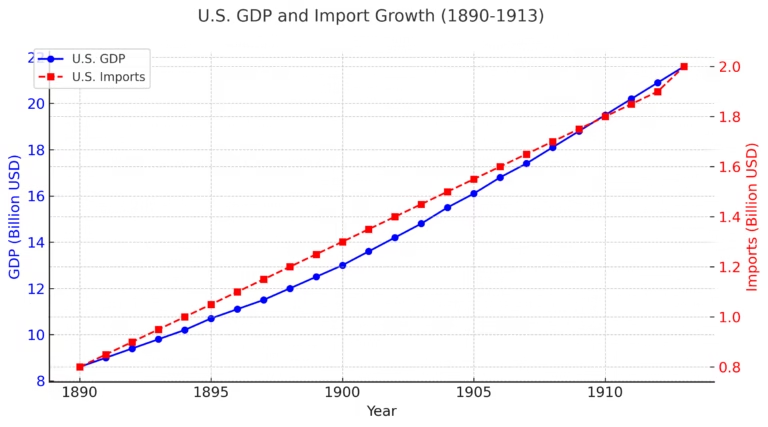
Generally, the U.S. economy experienced significant expansion during this period, with U.S. GDP rising from approximately $8.5 billion in 1890 to over $15 billion by 1913. Several factors contributed to this robust economic performance:
- Industrial Growth: Consequently, the Second Industrial Revolution drove advancements in steel production, railroads, and manufacturing. Furthermore, the rise of large corporations, such as U.S. Steel and Standard Oil, created new efficiencies and economic opportunities.
- Urbanization: Secondly, millions of immigrants arrived in the U.S., providing labor for factories and fueling demand for goods and services. Moreover, major cities like New York, Chicago, and Philadelphia grew rapidly.
- Technological Innovation: Furthermore, inventions such as the telephone, electric power, and automobiles laid the groundwork for future economic growth.
- Railroad Expansion: Additionally, an extensive railway network connected industries with national and international markets, facilitating the movement of raw materials and finished goods.
Therefore, these factors collectively strengthened the domestic economy and positioned the U.S. as a global economic leader.
The Rise of Imports and Global Trade
Sequentially, as the U.S. economy grew, so did its reliance on international trade. Imports increased substantially during this era, reflecting the nation’s growing appetite for foreign goods and raw materials. Several reasons contributed to the rise in imports:
- Firstly, Demand for Raw Materials: U.S. industries needed essential resources, such as rubber, tin, and coffee, which were sourced from international markets.
- Secondly, Consumer Goods: As household incomes rose, demand for luxury goods, textiles, and specialty items from Europe and Asia increased.
- Finally, Capital Investment: Foreign companies and investors played a role in financing industrial projects, further integrating the U.S. with global markets.
Moreover, while imports provided economic benefits, they also raised concerns among domestic manufacturers about foreign competition. Hence, this tension led to policy debates over the balance between free trade and protectionism.
Balancing Trade and Protectionism
With rising imports came the challenge of maintaining industrial competitiveness while ensuring access to global markets. Policymakers grappled with whether to maintain high tariffs to protect domestic industries or lower trade barriers to encourage economic exchange.
The Role of Tariffs
Tariffs remained the primary tool for regulating trade and generating government revenue. Some key developments included:
- McKinley Tariff (1890): Increased duties on foreign goods, aiming to protect American manufacturers but raising consumer costs.
- Dingley Tariff (1897): Further raised tariff rates to some of the highest levels in U.S. history.
- Payne-Aldrich Tariff (1909): Attempted to lower duties but faced criticism for favoring industrial interests over consumers.
Arguments for and Against Protectionism
- Proponents of High Tariffs: Advocated for protecting domestic industries, preserving jobs, and maintaining national economic security.
- Critics of Tariffs: Argued that high import duties increased consumer prices, limited trade opportunities, and provoked retaliation from other nations.
The tariff debate set the stage for broader financial reforms as policymakers sought alternative ways to stabilize government revenue and trade policies.
Financial Reforms and the Shift Toward Modern Taxation
As economic complexities grew, the U.S. government recognized the need for more stable financial systems and diversified revenue sources. Two landmark reforms emerged in 1913 to address these challenges: the Federal Reserve Act and the introduction of the income tax.
The Federal Reserve Act (1913)
The rapid expansion of the economy led to periodic financial panics, including the Panic of 1893 and the Panic of 1907. These crises underscored the need for a centralized banking system to provide financial stability.
- Purpose: The Federal Reserve Act established a central banking system to regulate monetary policy, stabilize currency values, and prevent banking crises.
- Impact: The Federal Reserve provided liquidity to banks, reduced financial instability, and facilitated smoother economic growth in the decades that followed.
Income Tax Introduction (1913)
Before 1913, the federal government relied heavily on tariffs for revenue. However, as trade policies became more contentious and government expenditures increased, a more sustainable revenue system was needed.
- 16th Amendment: Ratified in 1913, it allowed Congress to levy a federal income tax, shifting government revenue away from tariffs.
- Effect on Trade: The income tax provided financial flexibility, reducing reliance on import duties and enabling a more balanced approach to trade policy.
Conclusion: The Economic Foundation for the 20th Century
In conclusion, the period from 1890 to 1913 was a pivotal time in U.S. economic history, marked by rapid U.S. GDP growth, rising imports, and evolving financial policies. Therefore, as industrialization and global trade expanded, policymakers faced challenges in balancing protectionism with economic openness. In addition, the establishment of the Federal Reserve and the introduction of the income tax represented crucial steps toward modern fiscal policy, shaping the economic landscape of the 20th century and beyond. Furthermore, these reforms laid the foundation for a more stable and adaptable financial system, ensuring continued economic growth in the years to come.
References: U.S. GDP Growth & Revenue
Historical Statistics of the United States, Colonial Times to 1957: This comprehensive document from the U.S. Census Bureau offers extensive data on various economic indicators, including national income, imports, exports, and tariff rates during the specified period.
History of Tariffs in the United States: This Wikipedia article provides an overview of the evolution of U.S. tariff policies, highlighting how tariffs served as a primary revenue source before the introduction of the federal income tax in 1913.
How Did the United States Become a Net Exporter of Manufactured Goods?: This National Bureau of Economic Research (NBER) working paper explores the transition of the U.S. to a net exporter of manufactured goods around 1910, analyzing factors such as natural resource abundance and industrial expansion.
Trade Policy in American Economic History: This article reviews the broad changes in U.S. trade policy over the nation’s history, focusing on the role of import tariffs in revenue generation and protection of domestic industries.
Engineering Reference:
About George D. Allen Consulting:
George D. Allen Consulting is a pioneering force in driving engineering excellence and innovation within the automotive industry. Led by George D. Allen, a seasoned engineering specialist with an illustrious background in occupant safety and systems development, the company is committed to revolutionizing engineering practices for businesses on the cusp of automotive technology. With a proven track record, tailored solutions, and an unwavering commitment to staying ahead of industry trends, George D. Allen Consulting partners with organizations to create a safer, smarter, and more innovative future. For more information, visit www.GeorgeDAllen.com.
Contact:
Website: www.GeorgeDAllen.com
Email: inquiry@GeorgeDAllen.com
Phone: 248-509-4188
Unlock your engineering potential today. Connect with us for a consultation.